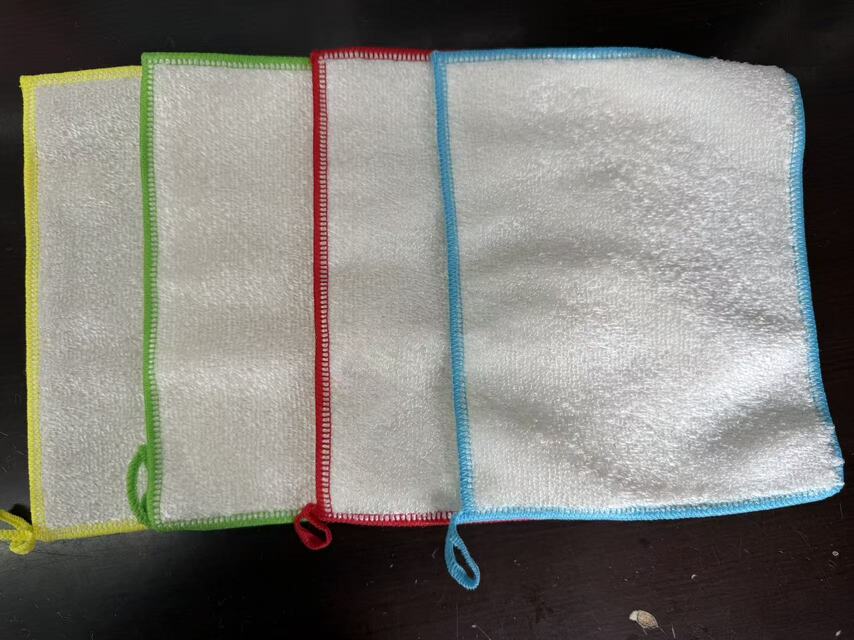
When most buyers compare microfiber cleaning cloths, they focus on price per unit. That’s understandable — but it’s also the reason so many private label launches struggle with returns and negative reviews. The real differentiator isn’t the price; it’s the GSM weight, fiber split ratio, and weave structure — three variables that determine how a cloth actually performs in the hands of an end consumer.
At Phoenix Home Exports, we’ve worked with buyers across 30+ countries. The questions we get most often from new importers all point to the same gap: they received samples they liked, placed a bulk order, and then found the production run felt different. This guide is written to help you avoid exactly that.
Why Microfiber Selection Matters More Than You Think
Two cloths can have identical dimensions and identical GSM but perform completely differently. Why? Because fiber split ratio and weave pattern are invisible in a simple spec sheet and only become apparent in use.
For example, a high-pile plush weave is excellent for automotive detailing because it traps dirt deep within the fibers, preventing scratches. However, if you use that same plush weave for glass cleaning, it will leave lint and streaks everywhere. For glass and mirrors, you need a fish scale weave, which is tightly knit and specifically engineered for streak-free polishing.
The Private Label OEM Checklist
Before you finalize spec sheets with any supplier, confirm the following. These are the points where production quality diverges most often between a sample and the final bulk run:
- Request production samples, not showroom samples. Ask for 5–10 pieces cut from the actual production roll you’ll be ordering from. Showroom samples are often hand-picked for perfection.
- Specify edge finishing. Hemmed edges vs. serged edges vs. ultrasonic cut edges all affect durability over multiple washes. For premium positioning, specify double-stitched hems with 100% polyester thread.
- Confirm color fastness standard. For EU markets, ask for ISO 105-C06 wash fastness test reports.
- Lock GSM tolerance in the contract. A ±10% GSM tolerance is industry standard; some low-cost suppliers will ship at the low end of tolerance consistently. Request a maximum acceptable variance of ±5%.
Conclusion
Choosing the right microfiber cloth for your private label brand comes down to matching the technical spec to the use case — and then locking in that spec at the contract level. The buyers who avoid sourcing problems aren’t necessarily working with better suppliers; they’re asking better questions before the PO is signed.
If you’re evaluating a reliable factory for your next container order, we’re happy to send production samples in your target GSM range. Let’s build a product your customers will love.